A leg splint is a rigid or semi-rigid support that holds an injured leg, ankle, or foot in a fixed position so it can heal without further damage. Not every injury needs the same kind of support, though a sprained ankle, a foot that drags with every step, and a shin recovering from a stress fracture all call for a completely different design, and using the wrong one can slow recovery or leave the injury without the support it actually needs.
This guide walks through the main types of Leg Splints Aapson carries, what each one is built for, and how to match a splint to your specific injury rather than guessing from a product photo.
Table of Contents
ToggleWhat Is a Leg Splint?
A leg splint is a brace-like device, usually lightweight polymer, metal stays, or padded fabric that holds a joint or bone in place from the outside instead of encasing it completely the way a cast does. Its purpose is straightforward: stop the injured area from moving in ways that would delay healing, while still letting a doctor check on the injury without doing any major procedure.
Splints stabilise an injury by resisting the specific movement that would aggravate it. An ankle immobiliser blocks side-to-side motion at the joint; a foot drop splint holds the foot up during a step so it doesn’t drag. Some splints are meant for a few weeks of temporary support after an injury or surgery, while others, like certain AFOs, provide long-term daily support for an ongoing condition such as nerve damage that won’t resolve on its own. For more background, see What Is a Splint? Types, Uses, and Benefits Explained.
When Is a Leg Splint Recommended?
Doctors reach for a splint after fractures, ankle sprains, and tendon injuries, where the joint needs to stay still while soft tissue or bone heals. They’re standard after many sports injuries and post-operative procedures, when the leg needs real protection but not the full rigidity of a cast. A splint is also the usual first response to foot drop, since it restores a safer walking pattern almost immediately, and it’s a common way to give general lower-leg support to a limb that’s weak, unstable, or recovering from a longer illness or hospital stay.
Types of Leg Splints
The right splint depends entirely on where the instability is and what’s causing it. Here’s how the main types differ.
Foot Drop Splints
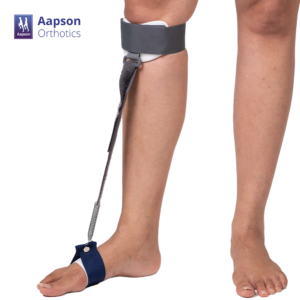
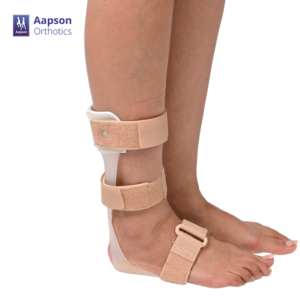
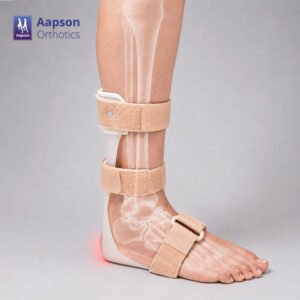
Foot drop is the inability to lift the front of your foot, usually from nerve damage, a stroke, or a condition like multiple sclerosis (MS) the toes catch on the ground with every step instead of clearing it, which is what causes the tripping and the dragging sound people notice first. A foot drop splint lifts the front of the foot during the swing phase of your stride, so it clears the ground close to the way it would normally.
Aapson offers three versions depending on how much movement you need.
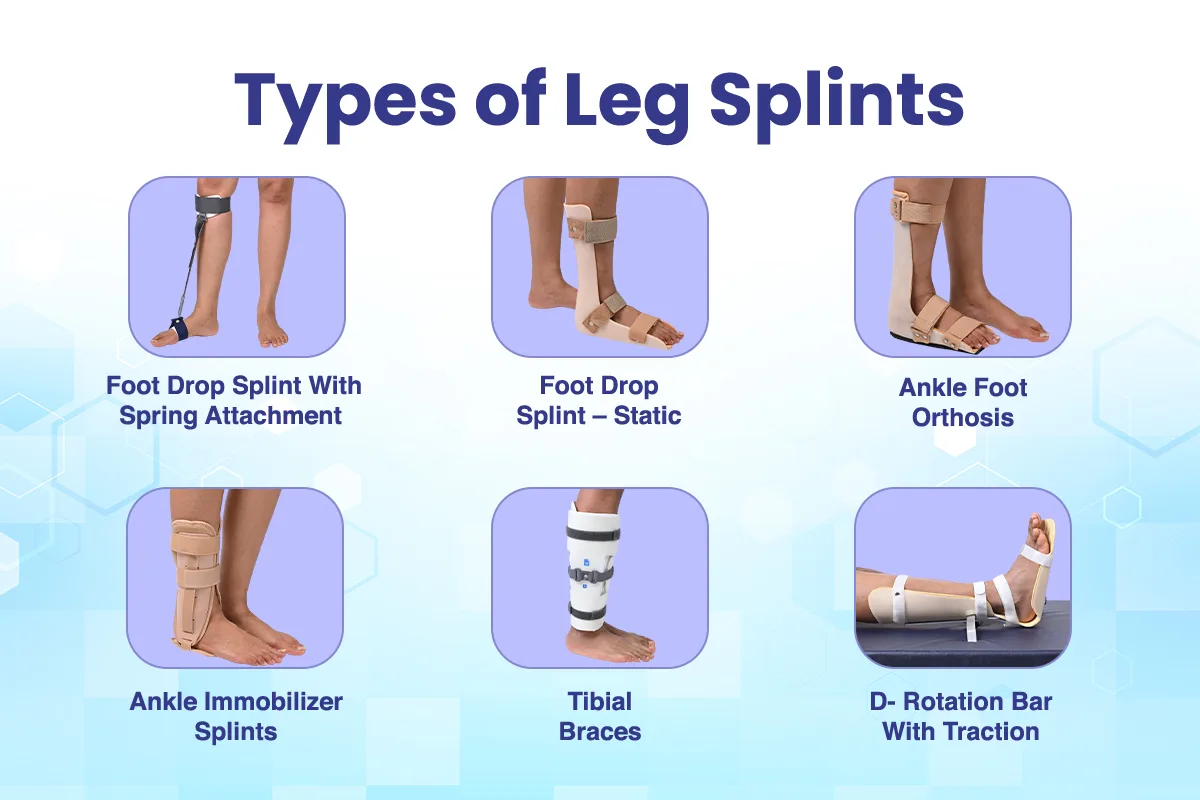
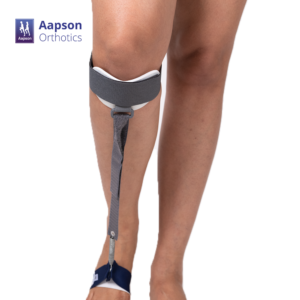
Foot Drop Splint With Spring Attachment: actively lifts the foot with each step using a coil spring.
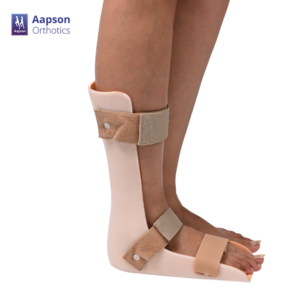
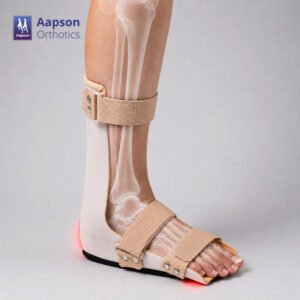
Foot Drop Splint – Static: holds the foot in one fixed position instead, which suits milder or more stable cases.
Foot Drop Splint (Leaf Spring): uses a flexible, low-profile design that fits inside most regular shoes, a good middle ground between the two.
Ankle Foot Orthosis (AFO)
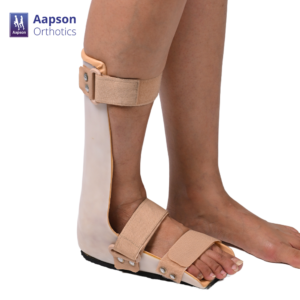
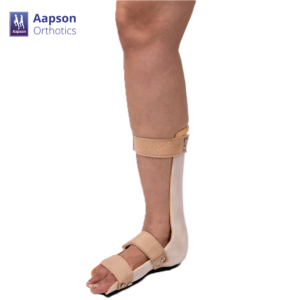
An AFO supports the ankle and the foot together, not just the toe-lift a basic foot drop splint provides. That extra ankle control matters for neurological conditions like stroke, cerebral palsy, or spinal cord injury, where the whole lower leg can be unstable side-to-side as well as front-to-back not just the forward swing of the foot. The A.F.O Static With Foot Gripper (Right/Left) adds a gripper section that keeps the foot from sliding inside the brace, which holds foot position more securely through a full day of wear.
Ankle Immobilizer Splints
An ankle immobilizer solves a different problem entirely not foot drop, but an ankle joint that needs to stay completely still. It locks out side-to-side and up-down motion at the joint so a sprain, ligament tear, or surgical repair isn’t disturbed while it heals. The Ankle Immobilizer Special uses a rigid outer shell with padded lining, built for exactly this kind of short-term, high-stability recovery after an injury or an operation.
Tibial Braces
A tibial brace supports the shin bone itself, separate from the ankle or foot joint, which matters after a tibial fracture or during rehab from a lower-leg injury where the bone needs protection as it strengthens. The Tibial Brace Without Foot wraps the lower leg without enclosing the foot, so normal ankle and foot movement stays free while the tibia itself gets the support it needs to heal properly.
Derotation Bars
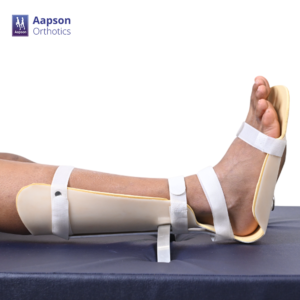
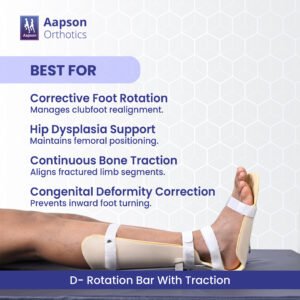
A derotation bar works differently from every other splint; here it connects two shoes with a rigid, adjustable bar to hold both feet in a specific rotated position. It’s used almost exclusively in pediatric orthopedic care, most often after clubfoot correction, to keep a child’s legs and feet aligned correctly while that correction holds during growth. The D-Rotation Bar With Traction lets the spacing and angle be adjusted over time as a child grows, so one bar can last through several stages of treatment.
How to Choose the Right Leg Splint
Start with what’s actually injured and how serious it is, a mild sprain and a post-surgical ankle need very different levels of rigidity. From there, match the splint to the exact area that needs support: foot, ankle, or shin each call for a different design, as the sections above show. Comfort and correct sizing decide whether you’ll actually wear it consistently, since a splint that rubs, slips, or feels bulky in your shoe tends to get left in a drawer within a week. When any of this is unclear,you should visit a doctor or physiotherapist rather than guessing it on your own.
Benefits of Using Leg Splints
Immobilization: It keeps your injured joint or bone still so it isn’t reinjured with every step.
Stability: It makes your leg feel firm and steady instead of wobbly.
Reduced strain: It stops your other muscles from getting sore.
Improved alignment: It holds your leg in the exact right position so it heals straight.
Better mobility support: It makes it much easier and safer for you to move around during the day.
Enhanced recovery support: It helps you heal up and get back to your normal life faster.
Leg Splints vs Casts
A splint and a cast solve the same basic problem in different ways, and the choice usually comes down to how much certainty the injury needs versus how much flexibility is useful while it heals.
Feature | Leg Splint | Cast |
Removable | Yes (many types) | No |
Allows swelling | Yes | Limited |
Easy inspection | Yes | No |
Early injury management | Yes | Usually after swelling decreases |
Splints are usually the first option right after an injury, while swelling is still unpredictable and a doctor needs to check the area regularly. A cast tends to come later, once the leg has settled into a more stable, healed shape and constant monitoring matters less.
Caring for Your Leg Splint
- Proper fit: Swelling changes throughout recovery, so a splint that felt right on day one can feel too tight or too loose by week two.
- Clean it as directed: Most padded splints can be wiped down with a damp cloth; fully submerging one in water can warp rigid supports or damage the padding.
- Store it somewhere dry and flat: Heat and moisture can warp plastic components over time, which throws off the fit you were relying on.
- Inspect it regularly: For cracks, worn straps, or flattened padding a damaged splint stops supporting the way it’s supposed to.
- Follow your doctor’s instructions: On wear time and any adjustments, and don’t modify the fit yourself without checking first.
Explore Our Splints
Leg and foot injuries aren’t the only place splints help. Aapson also makes support for wrists, fingers, and elbows. If it’s specifically your foot or lower leg you’re treating, browse the full Foot Splints range to compare all the options side by side.
Conclusion
Different leg injuries need different kinds of support; a foot drop splint solves a completely different problem than an ankle immobilizer or a tibial brace, even though all three fall under “leg splints.” Choosing the right one, in the right size, makes recovery more stable, more comfortable, and generally faster. Always match your choice to your specific injury and a healthcare professional’s advice rather than guessing from a product description alone.
Ready to find the right fit? Browse Aapson Splints.
Frequently Asked Questions
It depends on how much support you need day to day. A leaf spring or spring-attachment splint works well for mild to moderate foot drop where only the front of the foot is affected; if the ankle itself is also unstable, an AFO gives more complete control.
It varies by injury and healing speed, so follow whatever your doctor sets anywhere from a few weeks for a mild sprain to several months for an ongoing condition like foot drop. Don't extend or shorten that timeline on your own judgment.
Usually, yes. Most leg splints are designed to support walking, not stop it entirely; foot drop splints and AFOs exist specifically to make walking safer and steadier. Ankle immobilizers and some post-surgical splints may come with more specific weight-bearing restrictions from your doctor.
Every AFO addresses foot drop, but not every foot drop splint is a full AFO. A basic foot drop splint mainly lifts the toes during your stride; an AFO does that and also controls ankle position and side-to-side stability, which is why it's used for more involved neurological conditions.
An ankle immobilizer is one specific type of leg splint, built for one purpose: locking the ankle still after a sprain or surgery. "Leg splint" is the broader category that also includes foot drop splints, AFOs, tibial braces, and derotation bars.
Replacing it once the padding flattens, the straps lose their grip, or the rigid shell cracks any of these means it's no longer giving even support. Growing children in derotation bars or AFOs typically need a resize well before the splint itself wears out.
Top Picks for you
-
A.F.O Static With Foot Gripper (Right/Left)
₹2,2000 out of 5View Product This product has multiple variants. The options may be chosen on the product page -
Foot Drop Splint With Spring Attachment
₹8500 out of 5View Product This product has multiple variants. The options may be chosen on the product page -
Foot Drop Splint – Static
₹1,7200 out of 5View Product This product has multiple variants. The options may be chosen on the product page -
Foot Drop Splint (Leaf Spring)
₹9900 out of 5View Product This product has multiple variants. The options may be chosen on the product page -

Ankle Immobilizer Special
₹1,1500 out of 5View Product This product has multiple variants. The options may be chosen on the product page -
D- Rotation Bar With Traction
₹1,6500 out of 5View Product This product has multiple variants. The options may be chosen on the product page