Finger injuries have a funny way of being underestimated. A jammed finger from a basketball pass, a slammed car door, a fall while gardening these things happen in seconds, but the recovery can drag on for weeks if the finger isn’t immobilized properly. Bones in the hand are small and close together, tendons run right under the skin, and joints need to stay in exact alignment for healing to go well. That’s why a soft bandage or a strip of tape usually isn’t enough.
This is where finger splints come in. But here’s the part most people miss: not every finger splint does the same job. A splint built for a broken bone works completely differently from one made for a torn tendon or a swollen joint. Picking the wrong one can slow healing, cause stiffness, or leave the injury unsupported in exactly the spot it needs help most. In this guide, we’ll break down the different types of finger splints, what each one is actually built for, and how to figure out which one fits your situation.
Table of Contents
ToggleWhat Is a Finger Splint?
A finger splint is a rigid or semi-rigid support that holds an injured finger in a fixed position so the bone, joint, or tendon underneath can heal without being disturbed. Unlike a bandage, which mainly protects and compresses, a splint restricts movement at the joint level. That restriction is the whole point every time an injured finger bends, it puts stress on healing tissue, and repeated stress is what delays recovery or, in some cases, causes healing in the wrong position.
Doctors and physiotherapists usually recommend a splint the moment an X-ray or physical exam confirms a fracture, tendon injury, or unstable joint. It’s also common after certain hand surgeries, where the surgeon needs the finger to stay in one exact position during the early healing phase. Compared to plain bandaging, a good splint offers three things a bandage can’t: consistent alignment, protection from accidental knocks, and the ability to control how much the joint can move; some splints lock it completely, others allow limited motion for rehab purposes.
When Do You Need a Finger Splint?
Splints aren’t just for broken bones. They’re used across a surprisingly wide range of hand injuries:
- Fractures — any break in the finger bones, from hairline cracks to displaced breaks
- Mallet finger — when the tendon that straightens the fingertip is torn or stretched, usually from a direct blow to the tip
- Trigger finger — where the finger catches or locks when bending, often needing a splint to rest the tendon sheath
- Tendon injuries — including flexor and extensor tendon strains
- Sprains — overstretched ligaments from twisting or bending force
- Ligament injuries — including partial tears at the joint
- Finger dislocations — where the joint has slipped out of place and needs to be held in correct alignment during healing
- Post-surgery recovery — after tendon repair, joint surgery, or fracture fixation
Wondering how a finger splint actually helps a broken bone, torn tendon, or injured ligament heal? Read our detailed guide on How Finger Splints Help Tendons, Bones, and Ligaments Heal to understand the recovery process and why proper immobilization matters.
Different Types of Finger Splints
Here’s where it gets specific. Each splint design solves a different problem, and knowing the differences will save you from buying the wrong one.
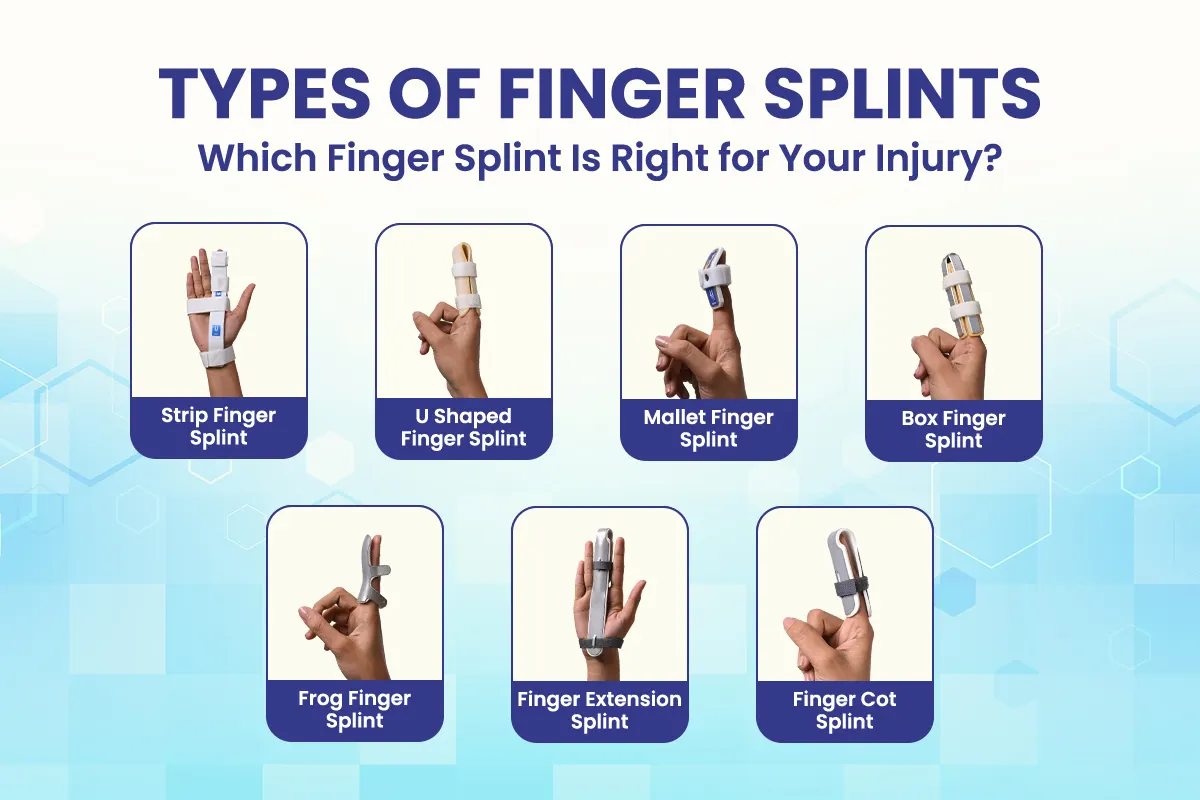
Strip Finger Splint
This is the classic aluminum splint most people picture when they hear the word “finger splint.” It’s a thin, flat strip of malleable aluminum, usually padded with foam on one side, that you bend to match the shape of the finger and secure with tape or a wrap. It’s lightweight, holds the finger straight in a fixed position, and is a go-to option after simple fractures where the bone needs to stay aligned. Because it also limits movement at the joint, it helps control swelling in the early days after injury. The best part is how easy it is to apply, no fitting appointment needed, just bend and tape. Explore the Strip Finger Splint for straightforward, dependable support.
U Shaped Finger Splint
The U-shaped splint wraps around the sides of the finger rather than sitting flat against it, which gives it an edge when the injury is closer to the tip. It’s a strong choice for fingertip injuries and distal phalanx fractures the small bone right at the end of the finger because it cradles the finger from both sides instead of just the front or back. This gives more stable immobilization exactly where the smallest, most fragile bone in the finger needs it. Check out the U Shaped Finger Splint built for fingertip-level protection.
Mallet Finger Splint
If your fingertip won’t straighten on its own after a ball hits it or it got jammed into something, you’re likely dealing with a mallet finger, a torn or stretched extensor tendon. This splint is specifically shaped to hold the fingertip joint in full extension, which is the only position that lets the tendon reattach and heal correctly. Unlike other splints, this one is meant for continuous wear, often for six to eight weeks, because even a brief moment of bending can undo weeks of healing progress. See the Mallet Finger Splint designed for this exact injury.
Box Finger Splint
When a finger has been crushed, think of a slammed door or a heavy object dropped on it, you need something that protects the entire finger, not just one side or joint. The box splint encloses the finger on all sides, offering complete immobilization for crush injuries and more serious finger fractures where multiple points need protection. It’s the most enclosed option on this list, and that’s exactly why it’s used for the more severe cases. Browse the Box Finger Splint for full-coverage protection.
Frog Finger Splint
The frog splint has an open, breathable design that still holds the finger securely without fully enclosing it. This makes it a smart pick for swollen fingers, where a tight or fully closed splint would be uncomfortable and could restrict circulation as swelling changes throughout the day. It works well for minor fractures and ligament injuries where you need support plus airflow, especially in the first days after injury when swelling is still settling down. Take a look at the Frog Finger Splint for a breathable, comfortable option.
Finger Extension Splint
Recovering from a tendon injury often means retraining the finger to extend properly without letting it stiffen up. The finger extension splint is built for exactly that phase it supports and encourages extension movement, which is critical during rehabilitation after tendon repair. Physiotherapists often bring this splint in once the acute injury phase has passed and the goal shifts from “protect it” to “get the movement back.” Find the Finger Extension Splint for tendon rehab support.
Finger Cot Splint
Not every finger injury needs rigid support. Sometimes what you need is protection for a wound, a dressing, or soft tissue that’s healing. The finger cot is a soft, sleeve-style covering that shields the fingertip from bumps and contamination without restricting movement the way a rigid splint would. It’s ideal for minor trauma, soft tissue injuries, and keeping dressings clean and in place. Explore the Finger Cot for lightweight, everyday protection.
Finger Splint Comparison Table
| Finger Splint | Best For | Immobilization Level | Finger Coverage |
| Strip Finger Splint | Finger fractures | High | Full finger |
| U Shaped Finger Splint | Fingertip fractures | Medium | Distal finger |
| Mallet Finger Splint | Mallet finger | High | Fingertip |
| Box Finger Splint | Crush injuries | Very High | Entire finger |
| Frog Finger Splint | Sprains & swelling | Medium | Open support |
| Finger Extension Splint | Tendon injuries | High | Full finger |
| Finger Cot | Fingertip protection | Low | Fingertip |
How to Choose the Right Finger Splint
Picking a splint off a shelf without thinking it through is how most people end up with the wrong one. A few things actually matter here:
- Injury location — tip, middle joint, or base of the finger all need different shapes of support
- Which finger is involved — the thumb and pinky often need different sizing than the middle fingers
- Doctor recommendation — always your first reference point, especially for fractures or tendon injuries
- Material — aluminum for rigidity, foam-lined for comfort, breathable fabric for longer wear
- Comfort — a splint you want to take off constantly won’t do its job
- Adjustability — swelling changes day to day, so some give in the fit helps
- Ventilation — matters more in warmer climates or for longer recovery periods
- Duration of use — a two-week sprain and a two-month tendon repair need very different levels of durability
How Long Should You Wear a Finger Splint?
There’s no single answer here, and that’s honestly the truth of it. Minor sprains might only need a splint for one to two weeks. Fractures typically require four to six weeks, sometimes longer depending on how the bone is healing on follow-up X-rays. Tendon repairs, especially mallet finger, often need continuous splinting for six to eight weeks, with any lapse in wear risking a setback. The safest approach is always to follow your doctor’s specific timeline rather than going by how the finger feels. A finger can feel fine well before the tissue underneath is actually healed.
Common Mistakes to Avoid While Wearing a Finger Splint
- Wearing it too loose — the finger can shift out of position, undoing the whole purpose of the splint
- Wearing it too tight — cuts circulation and causes unnecessary pain or numbness
- Removing it too early — even a day or two too soon can injure healing tissue
- Ignoring swelling — persistent or worsening swelling under a splint needs medical attention, not a shrug
- Getting the splint wet — softens padding, can cause skin irritation, and some materials lose their shape
- Using the wrong splint type — a mallet finger splint won’t help a crush injury, and vice versa
Why Choose Aapson Finger Splints?
Aapson builds finger splints using medical-grade materials that are genuinely lightweight and comfortable enough for extended daily wear. Every splint is available in adjustable sizes to accommodate swelling and different finger widths, and the range covers everything from simple fracture support to specialized tendon rehab. It’s the kind of trusted orthopedic support you can rely on whether you’re recovering from a fracture, a tendon tear, or post-surgical care.
Ready to buy finger splints online? Explore Aapson’s complete lineup of finger splint support options built for real recovery, not one-size-fits-all guesswork.
Conclusion
Every finger injury tells a different story, and the splint you choose should reflect that. A fracture, a tendon tear, and a swollen sprain all heal differently, and matching the right splint to the right injury genuinely speeds up recovery instead of just adding padding. If your injury feels serious or hasn’t improved with basic care, don’t guess consult a healthcare professional for proper diagnosis and guidance. And when you’re ready to find the right fit, explore Aapson’s complete range of finger splints built to support every stage of your recovery.
Frequently Asked Questions
For most simple fractures, a strip finger splint or box finger splint works well, depending on how severe the break is. Your doctor's assessment of the fracture type will guide the exact choice.
It's specifically designed to hold the fingertip joint straight so a torn extensor tendon can heal, which is the defining treatment for mallet finger injuries.
Yes, in most cases you should keep the splint on while sleeping, especially for fractures and mallet finger, since even a few hours without it can affect healing.
It should feel snug enough that the finger can't shift out of position but not so tight that you notice tingling, numbness, or color change in the fingertip.
Rigid aluminum splints generally shouldn't be soaked, but many come with removable, washable padding or wraps check the product details for specifics.
Indirectly, yes. By limiting movement at the injury site, splints reduce the irritation that causes pain, though they aren't a pain treatment on their own.
It depends entirely on the injury anywhere from one week for a mild sprain to two months for tendon repairs. Always follow your doctor's specific guidance.
-
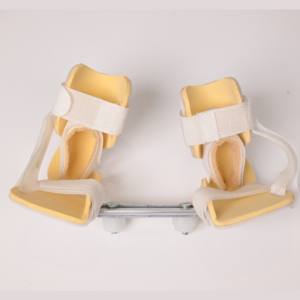
D.B Shoe
₹2,2250 out of 5View Product This product has multiple variants. The options may be chosen on the product page -
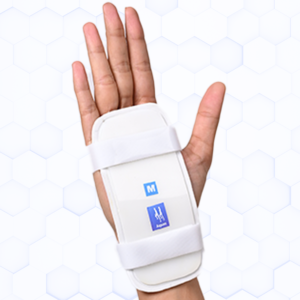
Arm Board
₹2200 out of 5View Product This product has multiple variants. The options may be chosen on the product page -
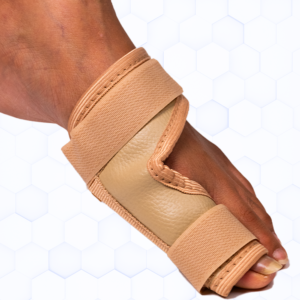
Hallux Valgus Splint
₹4900 out of 5View Product This product has multiple variants. The options may be chosen on the product page -
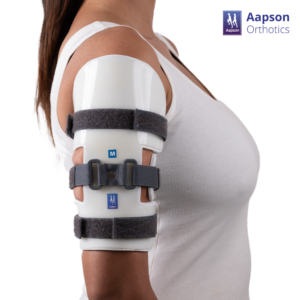
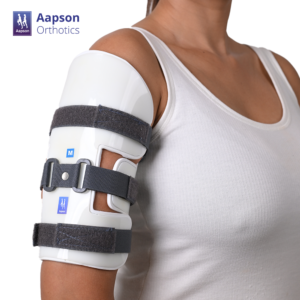
Humerus Brace
₹1,3500 out of 5View Product This product has multiple variants. The options may be chosen on the product page -
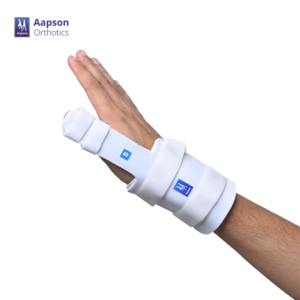
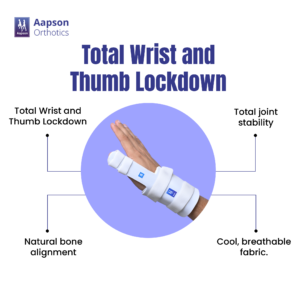
Wrist Immobilizer with Thumb Abduction
₹7600 out of 5View Product This product has multiple variants. The options may be chosen on the product page -
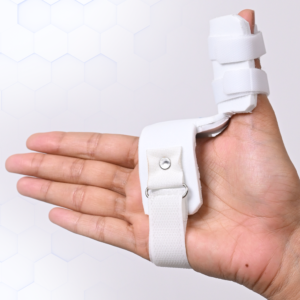

Thumb Abduction Splint
₹3900 out of 5View Product This product has multiple variants. The options may be chosen on the product page